Garner, NC · Water Heater Repair
Garner Water Heater Repair When the Tank Leaks, the Pilot Dies or the Shower Runs Cold
The shower runs cold, or water is spreading across the floor around the tank. Both are water heater repair calls, but they carry different urgency. A leak from the body of the tank means the heater is finished, while a cold shower with a dry floor is often a single failed part.
This page walks through the decisions in order: what the symptom points to, which checks are safe for a homeowner, whether the fix is a repair or a replacement, and what Garner-specific details change the plan. Homeowners looking for gas water heater repair in Garner NC usually start with the same two checks: whether the pilot or igniter is working and whether the gas shutoff handle sits in line with the pipe.
No hot water at all: what you can check before calling
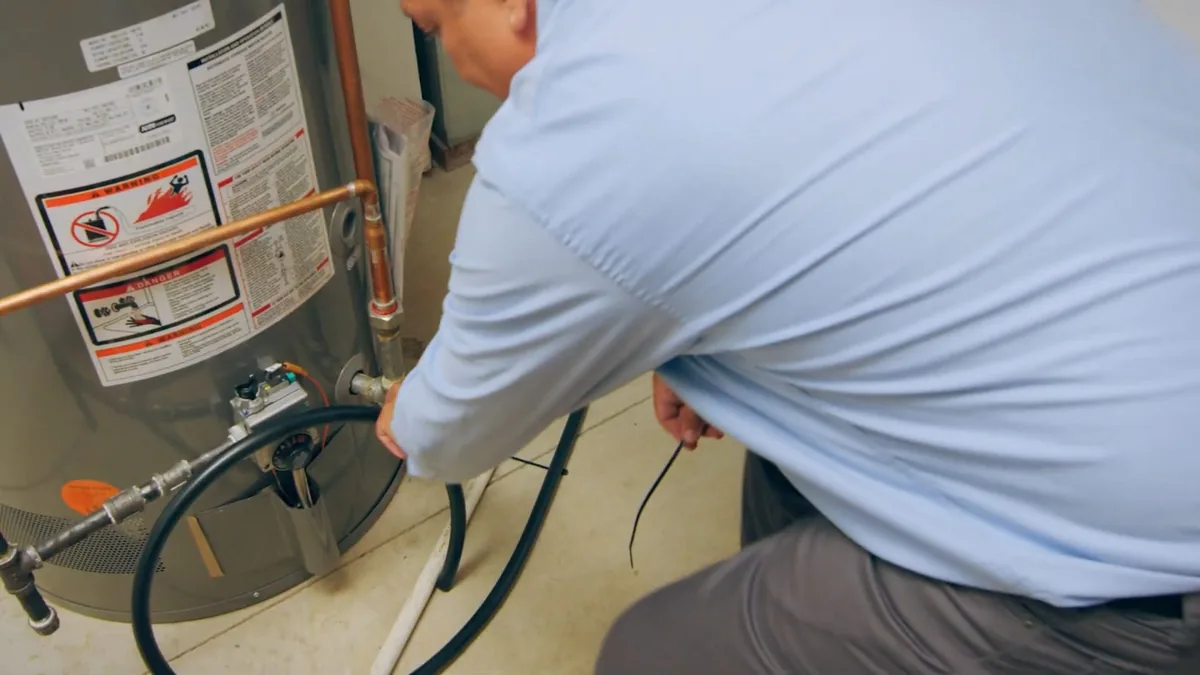
Start with the energy source, because it settles half of these calls. On an electric heater, look at the breaker panel for a tripped double-pole breaker and press the red reset button on the upper thermostat access panel only after the power is off at the breaker. On a gas heater, check whether the pilot light or the electronic igniter is working, and whether the gas shutoff handle on the supply line sits in line with the pipe.
If the breaker keeps tripping or the burner lights and goes out again, stop. Repeated resets hide a failing element, thermostat or thermocouple, and a heater that cycles on and off can overheat a wire or fill a closet with exhaust. That is the point to call rather than keep trying.
Also check whether the problem is the heater at all. If hot water is missing at only one faucet, the cause is more likely a fixture cartridge or a mixing valve than the tank. Run the hot tap nearest the heater and the one farthest away, and tell the plumber what you saw on each.
Reading water heater symptoms: lukewarm, rumbling, rusty
Each symptom has a usual suspect. Water that is warm but never hot often points to a failed lower heating element in an electric unit, or a burner that is dirty or underfiring in a gas unit. Water that runs hot and then fades quickly can mean a broken dip tube, which sends cold supply water straight to the outlet instead of the bottom of the tank.
- Popping or rumbling from the tank: sediment layered at the bottom, boiling under the deposit as the burner or element heats.
- Rust-colored hot water only: the tank lining or anode rod may be failing, while rust in both hot and cold taps points to the pipes instead.
- A sulfur or rotten-egg smell in hot water only: a reaction between the anode rod and bacteria in the tank, which a plumber can often address.
- Hot water that is far too hot: a stuck thermostat or a failed temperature and pressure relief valve needs prompt attention.
Describe the symptom in those terms when you call. A plumber who hears "rust only in the hot water, heater is 11 years old" arrives with the right parts and a realistic view of whether repair makes sense.
Water around the base of the tank: a loose fitting or a failed tank?
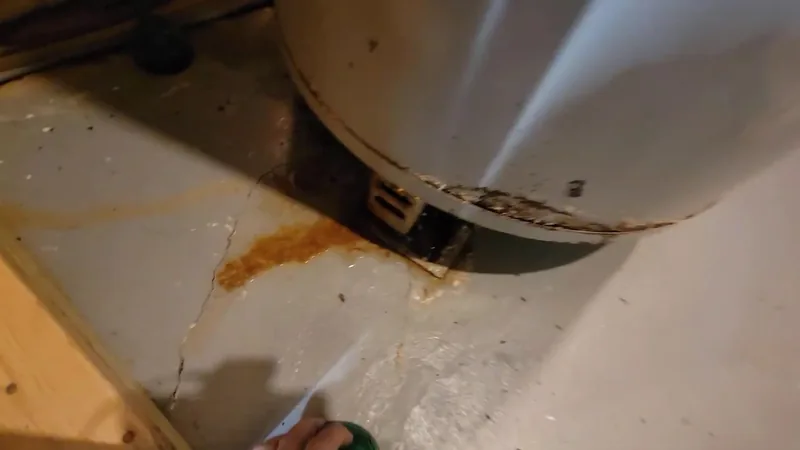
Not every puddle means a dead heater. Water can come from a dripping supply connection, a leaking drain valve, a weeping relief valve or condensation from a high-efficiency unit. Dry the floor, wipe each fitting with a paper towel and look for the one that gets wet again first.
If the water is coming from the tank body, from a seam or from beneath the jacket, repair is rarely possible. The steel inner tank has corroded through, and the unit needs replacement. Close the cold-water supply valve above the heater, turn off the power or set the gas control to off, and attach a hose to the drain valve if the tank must be emptied.
A slow leak still belongs in the urgent category when it sits above finished flooring or a living space. A tank that fails fully can release dozens of gallons. If the heater is in an attic or on an upper floor, shut off the water first and call right away.
Gas or electric: the checks that are safe, and the ones that are not
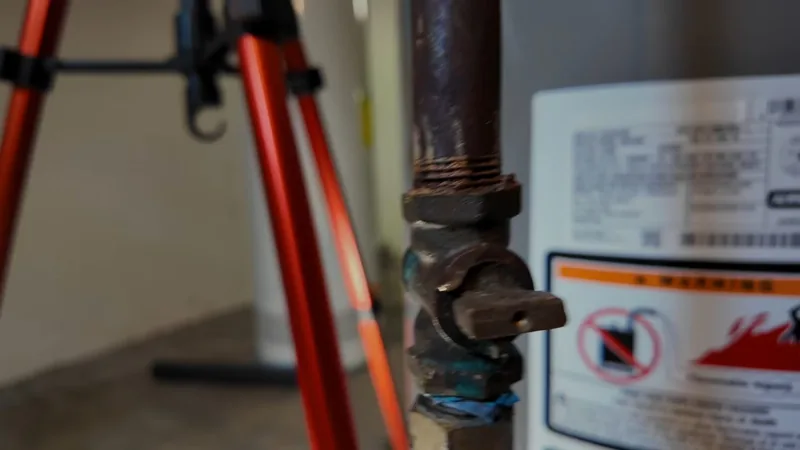
Safe homeowner checks are limited. Confirm the breaker, confirm the gas supply handle is open, and look at the pilot or igniter window. Do not remove a burner access panel, bend a gas line, or relight a pilot that keeps going out.
A gas smell changes the call completely. Do not switch lights or appliances on or off. Leave the house, then phone the gas utility and 911 from outside. Piping and appliance work starts after the utility has cleared the leak, and gas line repair is a separate job from the heater itself.
Venting matters as much as the burner. A gas heater with a loose or disconnected flue can release carbon monoxide into the home. If a carbon monoxide alarm sounds, move everyone outside and call 911 before calling a plumber.
Not sure which symptom you have? Describe it on the phone. A cold shower with a dry floor and a wet floor with a warm shower are handled differently.
Repair or replace: the questions that decide it
Age is the first filter. Most tank heaters are built for roughly eight to twelve years of service, a range installers commonly cite rather than a promise. The date code on the rating plate tells you the manufacture month and year, and a plumber can read it in seconds.
- How old is the tank, and is it leaking from the body? A leak from the tank body ends the repair question.
- What is the repair, and does it fix a part or a symptom? A new element or thermostat is a part. A recurring problem with a new part is a symptom.
- What would a replacement of the same size involve? Ask for both options with the scope described, so the numbers can be compared fairly.
- Is there remaining warranty? Many tanks carry a longer warranty on the tank than on the parts.
If the answer points to replacement, replacement water heater installation covers sizing, venting and code points, and tankless models have their own page because their problems and costs differ. Cost ranges for both are on the cost page, and a plumber still confirms the price after looking at your unit.
What Garner's soft water does and does not change
Garner is served by City of Raleigh water, and Raleigh's published water quality data lists hardness at roughly 1.4 to 1.5 grains per gallon, which is soft. Scale builds more slowly in a heater here than in hard-water regions, so a softener is not a reason to hold off on repair or a way to protect a new tank.
Soft water does not stop a tank from aging. The anode rod still wears down, and sediment still collects over the years. If a plumber suggests flushing the tank, ask what they found in the drain water and what the flush is meant to prevent. For homes on a private well the picture is different, and a water test comes first.
Heaters in garages and crawl spaces during a Wake County winter
Winter lows in Wake County hover around or just below freezing and occasionally fall into the teens. A heater in an unheated garage or a vented crawl space loses heat faster, and the cold-water inlet and relief-valve piping above it are the first lines to freeze.
Before a hard freeze, insulate the exposed supply lines and keep the garage door closed. If a pipe near the heater has frozen, close the main shutoff and leave the heater off until the line is thawed and checked. Firing a gas or electric heater with a frozen inlet can damage the tank or the controls. A plumber doing tracing a hidden leak work can also check the line once it thaws.
Permits, the gas utility and who else may need to be called
Repairs of existing parts normally do not involve the Town, but replacing or relocating a heater can. The Town of Garner Inspections Department at Town Hall, 900 7th Avenue, handles plumbing permits. The Town says plumbing installations, changes, additions and modifications are subject to permitting and inspection, but it does not name water heater replacement, so Garner's own rule for that job was not confirmed. For reference, Wake County's own permit FAQ says a like-for-like water heater replacement in a one or two-family home may not need a permit when the energy input is no higher, the fuel type, location and venting or piping stay the same, and the work is done by a plumbing contractor who meets the county's requirements; anything beyond that falls under the general plumbing permit rule. Ask the plumber whether a permit applies to your job and confirm with Inspections if you want to be sure.
Other offices own other parts of the problem. Low water pressure on the whole street, or no water at the meter, is a question for Raleigh Public Utilities at (919) 996-3245. A gas smell goes to the gas utility. A tripping breaker that does not clear after the heater is off is an electrician's problem, not a plumber's.
Water Heater Repair questions in Garner
How long does a tank water heater usually last?
Most tank heaters are built for roughly eight to twelve years, a range installers commonly cite. Age matters less than the symptom: a leak from the tank body means replacement at any age, while a failed element or thermostat on a younger tank is a repair.
Why does my water heater make popping or rumbling sounds?
Sediment collects at the bottom of the tank, and water trapped under it boils as the burner or element heats. The noise is a sign of buildup, and a plumber can tell you whether flushing is likely to help or whether the tank is near the end of its life.
Is a puddle under my water heater always a failed tank?
No. A loose supply connection, a dripping drain valve, a weeping relief valve or condensation from a high-efficiency unit can all leave a puddle. Dry the area and watch which fitting gets wet first, then tell the plumber what you found.
Can I keep using a leaking water heater until someone arrives?
If water is coming from the tank body, close the cold-water supply valve above the heater and turn off the power or set the gas control to off. Do not run it empty, and do not leave a heater leaking above finished flooring or a living space.
Need water heater repair in Garner?
Call, describe what you are seeing, and get a plumber for your part of town. Prices are quoted after the plumber diagnoses the problem.