Garner, NC · Leak Detection
Garner Water Leak Detection: Early Signs and Finding the Leak Before Anything Is Opened
A water bill that jumps with no change in habits, a damp patch on a ceiling, or a meter that moves when every tap is off all say the same thing: water is going somewhere it should not. The question is where, and the answer decides whether the repair is a ten-minute fix or a wall opened at the wrong place.
This page follows the order of a good leak investigation: signs worth acting on, the meter test you can do yourself, how the source is narrowed down, and who owns each part of the line. Water leak detection services in Garner NC start with the meter test described below, which costs nothing and tells you whether water is moving when everything is off.
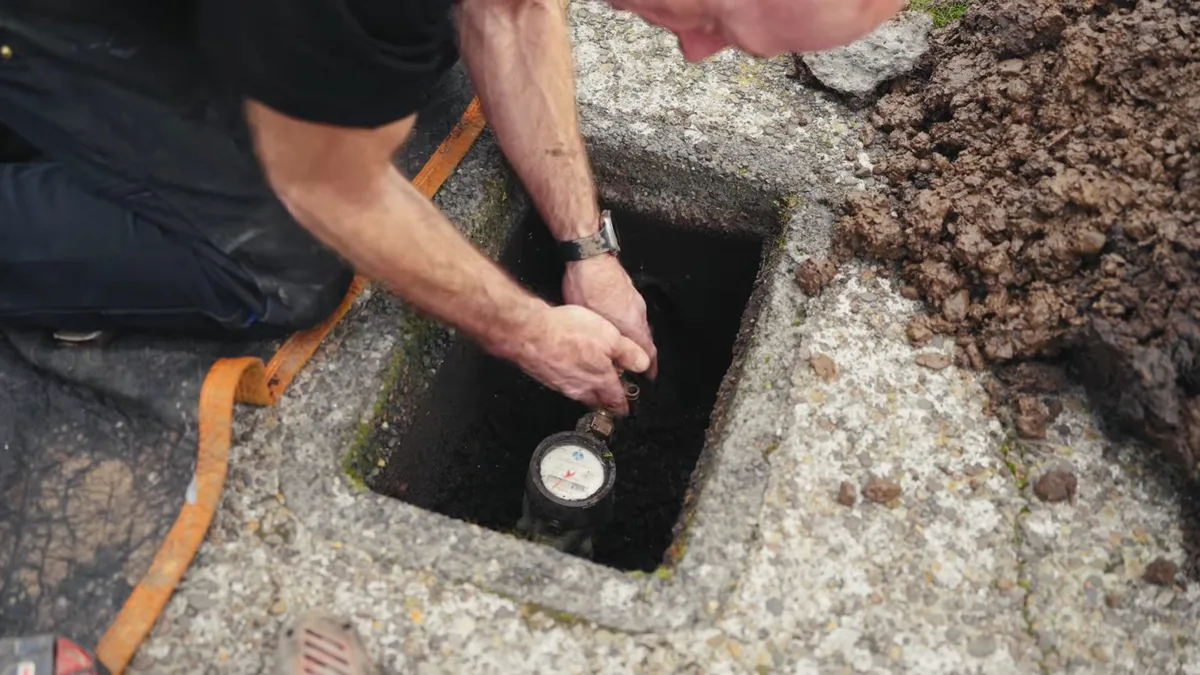
Early signs of a hidden water leak worth acting on
Most hidden leaks announce themselves long before they cause damage, and small signs are easy to dismiss. Taken together they are hard to ignore.
- A water bill that rises with no change in household use.
- Sound of running water when every fixture is off.
- A damp, stained or bubbling patch on a ceiling, wall or floor.
- A musty smell in a closet, cabinet or room with no obvious source.
- A warm spot on a floor, or hot water that takes longer to arrive than it used to.
- Low water pressure that appeared suddenly in one part of the house.
Write down when each sign started. A plumber hearing that the bill rose two billing cycles ago and a warm spot appeared last week can focus on the hot side of the system.
The meter test: is water moving when everything is off?
Close every faucet, make sure no appliance is running, and look at the water meter at the street. Most meters have a small low-flow indicator, a triangle or a dial, that spins when any water passes. If it moves with everything off, water is leaving the system somewhere.
Read the meter and wait an hour with no water used, then read it again. A change confirms a leak and also gives its rough size. A leak that shows up on the meter but not in the house points to the line between the meter and the house, under the yard.
Next, close the main shutoff valve at the house and look at the meter again. If it stops, the leak is inside the house. If it keeps moving, the leak is between the meter and the house valve. That one step separates two very different jobs.
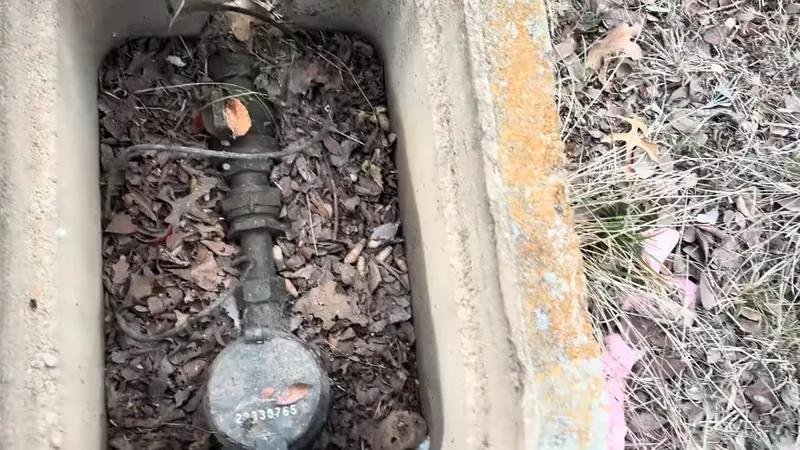
Who owns the leak: the City or the homeowner
Garner homes get water from the City of Raleigh. The City of Raleigh says it maintains water lines up to your property line, and from there to your house it is the owner's responsibility. A leak on the street side of the property line is a call to Raleigh Public Utilities at (919) 996-3245. A leak after it is the homeowner's repair.
Tell the plumber what the meter test showed before the visit. If it points to the street side, a plumber cannot fix the City's pipe and the first call is to the utility.
Call 811 at least three working days before any digging (NC811), and ask the plumber whether the Town of Garner Inspections Department at 900 7th Avenue needs to be involved in a repair that changes piping.
Did the meter move with everything off? Say so on the call. It tells the plumber where to start.
How a hidden leak is narrowed down
Detection works by elimination. The plumber isolates sections of the system, listens with acoustic equipment, and uses other tools where they apply. The aim is to open as little as possible.
- Isolate: shut off valves in sequence to find which section holds pressure.
- Listen: use acoustic equipment on floors, walls and exposed pipe to hear the escaping water.
- Scan: use thermal or moisture instruments to confirm a warm or wet area.
- Confirm: pressure test the suspected section before anything is cut.
- Mark: record the location on the surface so the opening is as small as possible.
Ask the plumber to show you what each step found. A leak located at a measured spot with two methods agreeing is worth opening for, while one based on a single reading may not be.
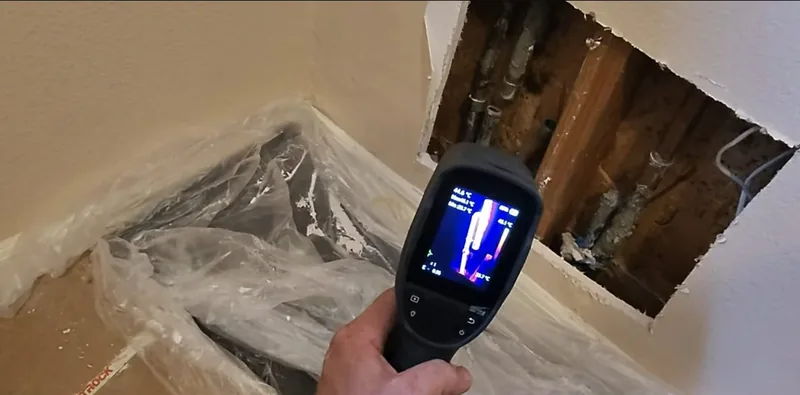
Where leaks hide: walls, floors, yards and fixtures
Different places produce different clues. A leak in a supply line behind a wall often shows as a stain or a musty smell. A leak under a floor can show as a warm spot or a springy section of flooring. A leak in the yard shows as a soggy patch or an unusually green stretch of lawn.
Not every wet spot is a plumbing leak. Roofs, gutters, window frames and condensation can look similar, and a plumber should rule those out before opening a wall. Leaks at a fixture, such as under a sink, are covered under faucet and sink repair. A leak under a concrete slab is covered under leaks under a concrete floor.
Gas leaks are a different matter. If you smell gas, leave the house and call the gas utility and 911 from outside. Detection of gas piping problems follows the utility's clearance, and repair of the gas piping itself covers the work that comes after.
Winter freezes and leaks that show up afterward
Wake County winters hover around or just below freezing and occasionally fall into the teens. A pipe that froze and split may not leak until it thaws, so a leak can appear a day after the cold snap.
After a freeze, check the meter test, look in garages and crawl spaces, and listen for water. If a wall or ceiling is wet, close the main and call. Drying and removal of wet material is covered under drying out wet materials.
Questions for the plumber before a wall or floor is opened
- What methods located the leak, and did two of them agree?
- How big is the opening, and who repairs the finish?
- Is this a repair or a sign that more of the pipe is failing?
- Is the leak before or after the meter?
- Does an insurer need documentation of how the leak was found?
If the answer to the third question is that the pipe is failing, the conversation turns to deciding on whole-house repiping.
Leak Detection questions in Garner
How can I tell whether I have a hidden leak?
A rising water bill with no change in use, the sound of running water when everything is off, a damp or stained patch, a musty smell or a warm spot on a floor are the usual signs. The meter test confirms it.
How do I test my water meter for a leak?
Close every faucet and appliance, then check the meter's low-flow indicator. If it moves, water is leaving the system. Closing the main valve at the house and checking again shows whether the leak is inside the house or between the meter and the house.
Who fixes a leak between the street and my meter?
The City of Raleigh maintains water lines up to your property line. Call Raleigh Public Utilities at (919) 996-3245. A leak after the property line is the homeowner's repair.
Need leak detection in Garner?
Call, describe what you are seeing, and get a plumber for your part of town. Prices are quoted after the plumber diagnoses the problem.