Garner, NC · Slab Leak Repair
Garner Slab Leak Repair: Warm Floors, Running-Water Sounds and Reroute or Break-In Choices
A warm patch on a floor, the sound of running water with every tap closed, or a bill that climbed with no explanation can all point to a leak in a line under a concrete slab. Not every Garner home sits on a slab, and a leak that is not under one needs a different plan, so confirming the foundation type comes first.
This page covers the decisions that follow: how a slab leak is confirmed, whether to break into the slab or reroute the line, what to do about the foundation and the insurance paperwork, and who owns each part of the line. Slab leak detection and repair in Garner NC begins with confirming that the house sits on a slab, then locating the leak before any concrete is cut.
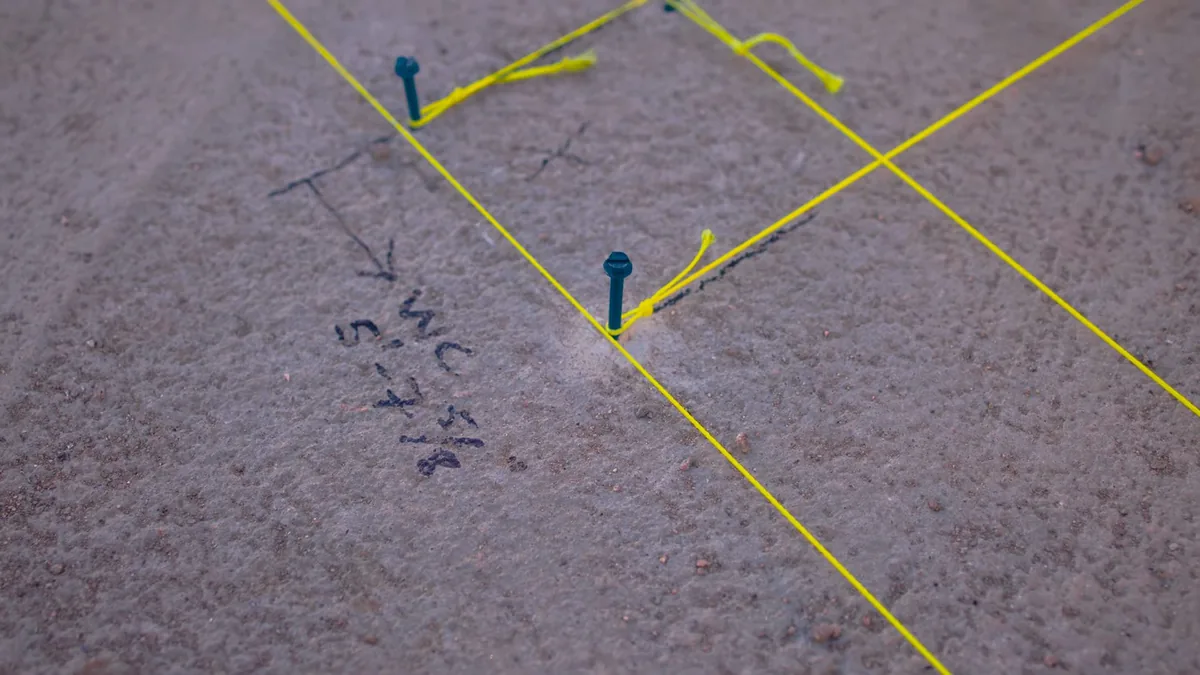
Is your house on a slab, and is this really a slab leak?
Foundation type varies across Garner. Some homes sit on a concrete slab, some on a crawl space and some on a basement, and the housing mix was not verified for this page. A plumber can confirm yours in minutes by looking under the house or at the garage and utility areas.
If the home has a crawl space, most supply lines are visible and reachable from below. A leak there is repaired without breaking concrete and belongs under leak detection. A slab leak means a line runs through or under the concrete, which changes the options.
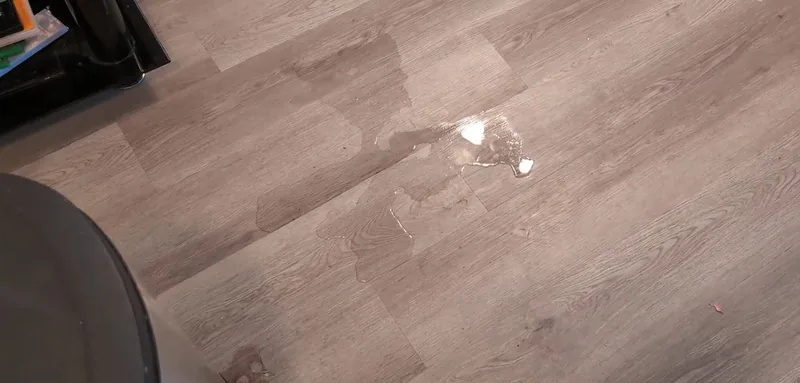
- Warm or hot spots on a floor, especially in one area.
- Sound of running water with every fixture closed.
- Water bill rising without a change in habits.
- Water meter moving with all taps off and the main closed inside the house.
- Dampness or discolored flooring along a baseboard or at a slab edge.
How a slab leak is confirmed before concrete is cut
Breaking a slab is the most invasive step in residential plumbing, so confirmation comes first. The plumber starts with the meter test, closes the main at the house and checks that the meter stops moving. If the meter keeps moving after the main is closed, the leak is between the meter and the house valve. If it stops, the leak is in the house.
Next the plumber pressure-tests the hot and cold lines separately to see which holds. A hot-side leak often shows as a warm spot. Acoustic equipment on the floor then pinpoints the sound, and a thermal or moisture reading can confirm the area. Two methods that agree on a location are worth cutting for. One reading alone is not.
Ask the plumber to mark the floor at the located spot and to say how far it is from the nearest wall or fixture. That measurement guides whether a direct repair is practical and gives you something to compare with any later quote.
Break in, reroute or line through the walls
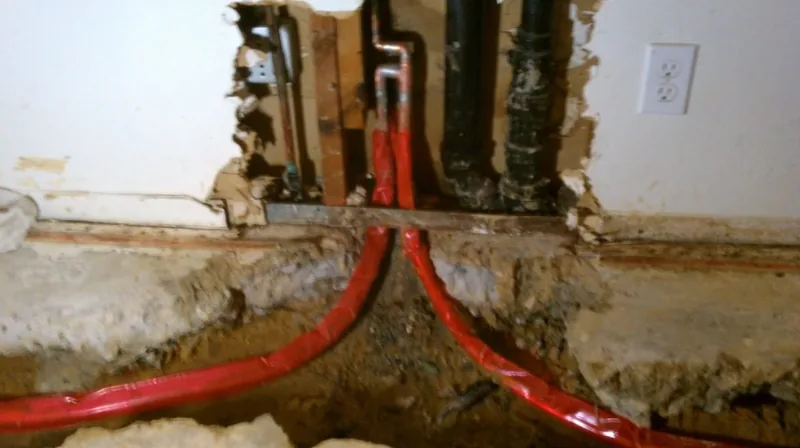
Once the leak is located there are three broad choices, and the camera or locator result should feed the decision. A direct repair breaks the slab at the leak and replaces that section. A reroute abandons the leaking line and runs a new one overhead through attic or walls. A repipe replaces more of the system.
- Direct repair: fast and local, but breaks concrete and leaves the rest of the aging line in place.
- Reroute: avoids breaking the slab and serves as a fix for a line that leaked more than once under the same floor.
- Repipe: addresses a system that is leaking in several places, covered under whole-house repiping.
- Trenchless options in a slab context are described on the trenchless repair page, where the method is compared with digging.
Ask what each option leaves behind. A direct repair leaves old pipe underground. A reroute leaves a dead line in the slab, which should be capped at both ends. A repipe leaves the fewest unknowns but costs the most.
Seeing a warm patch on the floor? Mention where it is and when it started. It helps the plumber choose the first test.
What a leak under the slab can do to the foundation
Water under a slab can wash out or soften the soil beneath it. Over time that can leave a void, and a floor that feels spongy or hollow is a sign. Cracks that grow, doors that stick and gaps at baseboards are other clues, but they have many causes and a plumber is not a structural engineer.
If you see movement or widening cracks, ask the plumber to document what they find under the slab and consider asking a structural engineer to assess the foundation. Do not assume the leak caused the movement, and do not assume it did not. Keep dated photos, and tell the plumber about any earlier foundation repair.
Not every slab condition applies to every place. The dataset's references to soil types and slab construction from other regions were not used here, because they were not verified for Garner. Ask the plumber what they actually see at your house.
Insurance, documentation and who pays for what
Many homeowner policies cover the resulting damage differently from the repair of the pipe itself, and policies vary. If you plan to file a claim, document the leak before repairs begin: photos of the floor, the meter readings, the plumber's findings and the located spot.
Ask the plumber for a written description of what was found and what was repaired. Call your insurer before the work starts if you can, because some policies require notice or an assessment first. This page is general information, and it is not advice on your policy.
Permits, the meter boundary and the utilities
The Town of Garner Inspections Department at Town Hall, 900 7th Avenue, requires plumbing permits for plumbing installs and changes. A reroute or a repipe is a change. Ask who pulls the permit and when the inspection is.
City of Raleigh water serves Garner. The City says it maintains water lines up to your property line. If the meter test shows the leak is on the City side, call Raleigh Public Utilities at (919) 996-3245. A leak past the property line is the owner's repair.
If the slab holds a gas line or the leak may involve gas piping, leave the house and call the gas utility and 911 from outside. Do not run tools or switch lights on in a space where gas may be present.
Questions to ask a slab leak plumber before concrete is cut
- Which two methods agree on where the leak is?
- How far is the located spot from the nearest wall or fixture?
- What are the direct repair and reroute options, and what does each leave behind?
- Is the rest of the line likely to fail soon?
- Who restores the floor finish, and is the permit included?
Slab Leak Repair questions in Garner
How do I know whether the leak is under a slab?
Warm floor spots, running-water sounds with every fixture closed and a meter that keeps moving after the main is closed inside the house are common signs. Confirm the foundation type first, because a crawl space leak is repaired without breaking concrete.
Should I break the slab or reroute the line?
A direct repair is fast and local but breaks concrete. A reroute avoids the slab and suits a line that has leaked more than once. A repipe suits a system leaking in several places. Ask each option's scope and what it leaves behind.
Does a slab leak damage the foundation?
It can, because leaking water can soften or wash out soil beneath the slab. Spongy floors and widening cracks are signs, but they have other causes. If you see movement, ask a structural engineer to assess it.
Need slab leak repair in Garner?
Call, describe what you are seeing, and get a plumber for your part of town. Prices are quoted after the plumber diagnoses the problem.