Garner, NC · Trenchless Sewer Repair
Garner Trenchless Pipe Lining and Pipe Bursting: When Digging Can Be Avoided
A cracked sewer line under a driveway, a mature tree or a finished patio makes digging an expensive and disruptive choice. Trenchless repair works from small access points instead, and it fits some pipes well and others not at all.
This page compares the two trenchless methods with open-trench repair, explains what makes a line a candidate, and lists what to ask before any lining work is approved. Trenchless pipe lining and relining in Garner NC limit digging to small access pits, and a camera inspection decides whether the old pipe is sound enough to line.
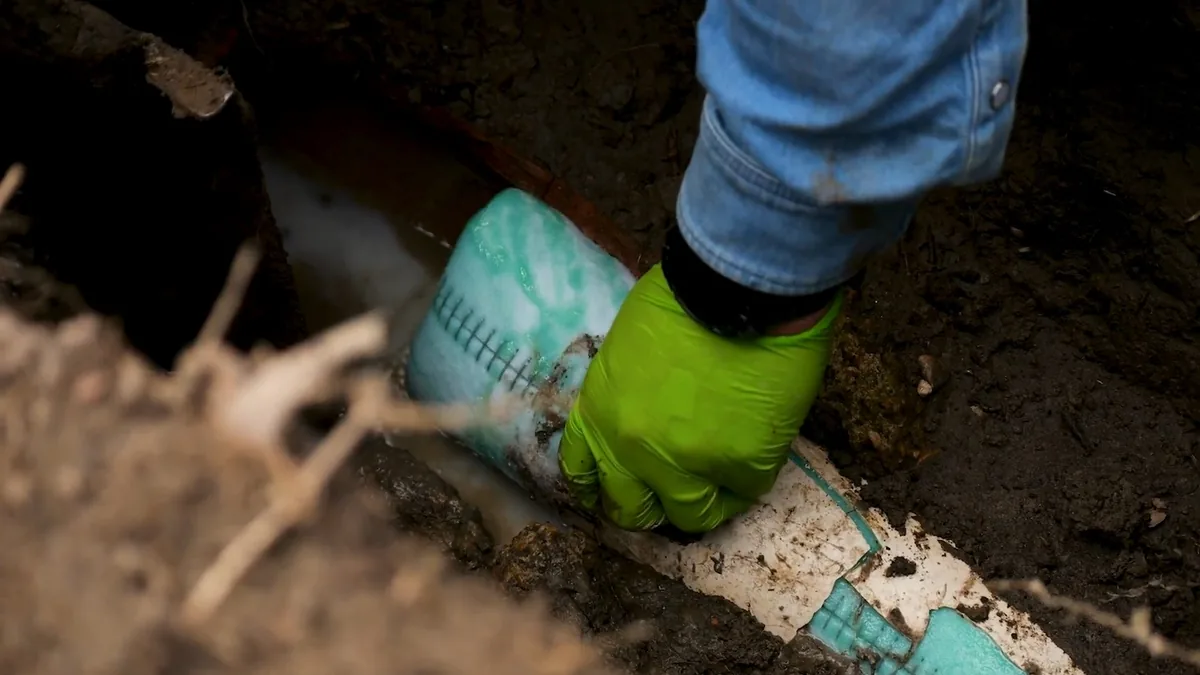
Pipe lining versus pipe bursting: two different methods
Cured-in-place pipe lining, often called CIPP, inserts a resin-soaked liner into the existing pipe and cures it so it hardens into a new pipe inside the old one. The old pipe stays in the ground, and the liner restores the flow surface and seals cracks and joints.
Pipe bursting pulls a new pipe through the old line while breaking the old pipe outward into the surrounding soil. It replaces the pipe rather than lining it, and it can restore a pipe that has lost its shape. It needs larger access pits at each end.
- Lining: the pipe must still hold its shape and be reasonably clear of obstructions.
- Bursting: suits pipe that is broken or has lost capacity, with room for pits.
- Neither: a pipe that has collapsed across its width, or has a severe offset, may need digging.
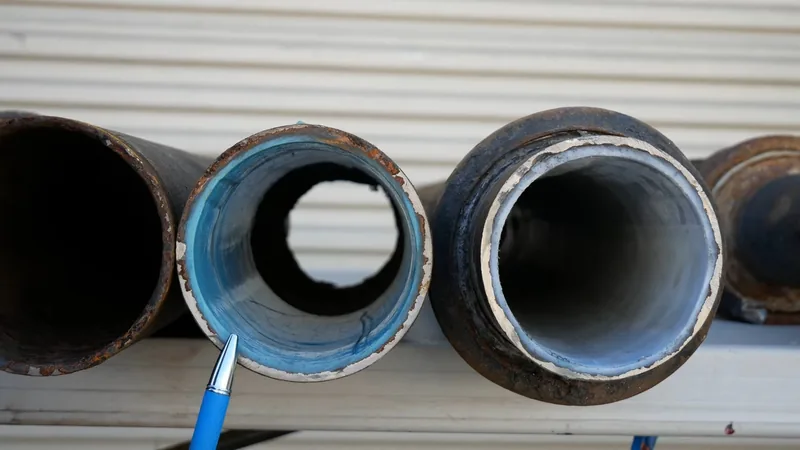
Trenchless or open trench: how the comparison works
Trenchless is not always cheaper or better. It reduces digging, so it matters most where the surface is expensive to restore: under driveways, patios, mature trees and finished landscaping. Where the pipe is shallow and the yard is open lawn, a short trench may cost less and be simpler.
- What does the camera show, and is the pipe round and continuous enough for a liner?
- How much surface would digging disturb, and what would it cost to restore?
- How many access points does the trenchless option need?
- What warranty comes with each method, and what does it exclude?
- How does each option handle the lateral connection to the house and to the main?
Ask the plumber to give both options in writing whenever the camera allows either. The camera comes first, and what a good camera inspection shows is explained what a good inspection should tell you.
What makes a line a candidate for lining
The pipe must be accessible from both ends, clean enough for the liner to bond and continuous enough to carry it through. Cracks, root intrusion and joint leaks are good candidates. A line that holds standing water in a deep sag may not drain properly even after lining, because a liner follows the shape of the pipe it sits in.
Cleaning comes first. The line must be cleared of roots, scale and debris, and jetting to clean the line first is often part of the preparation. A camera pass afterward confirms the pipe is ready.
Lateral connections matter. Branches that enter the main line must be reopened after the liner cures, and a plumber should explain how that is done and how the connection to the house cleanout will be sealed.
Trenchless lining day: cleaning, liner insertion and curing
A lining job starts with cleaning and a camera pass, then the liner is prepared, inserted through an access point and expanded against the pipe wall. Heat, steam or ultraviolet light cures the resin, which takes hours rather than minutes, and the line is out of use for that time. Plan to avoid using water in the house until the plumber says the liner has cured and the connections have been reopened.
A final camera run records the finished pipe. Ask for that recording and for the manufacturer's paperwork on the liner, and keep both with the house records. If the house is sold later, a documented lining with a warranty is something a buyer or an inspector will ask about.
Bursting has a different rhythm. The plumber digs a pit at each end, pulls the new pipe through while the old one breaks apart around it, and reconnects at both pits. The yard is disturbed at two points instead of along the whole line, and the new pipe is a continuous run of the same material.
Trenchless methods under a slab
The same no-dig idea applies to some lines beneath a concrete floor, where the choice is between breaking the slab and working through small openings. Lining a drain or a waste line from a cleanout avoids cutting concrete, though it only helps where the pipe is continuous and accessible from an opening.
A supply line leaking under a slab is a different case, because lining techniques differ for pressurized pipe and the usual alternative is rerouting the line overhead. That comparison is covered on the slab leak page, which treats it as a leak decision as much as a pipe method.
Have a camera recording from an earlier visit? Mention it on the call. It can shorten the assessment.
Questions to ask before approving a lining job
- Can I see the camera footage that shows the pipe is a candidate?
- What is the liner made of, and how long is the manufacturer warranty?
- How are the lateral connections reopened and sealed?
- What happens if the liner cannot pass an obstruction or a deep sag?
- Is a permit required, and who pulls it?
A plumber who has a clear answer to each has planned the job. A plumber who cannot is still guessing what is in the ground.
Permits, 811 and who owns the line
Garner homes are on City of Raleigh sewer. The City owns the main in the street, and the lateral to the house is generally the owner's on private property. Trenchless work on the lateral is the owner's job, and the connection at the main is the City's.
The Town of Garner Inspections Department at Town Hall, 900 7th Avenue, requires a plumbing permit for sewer lateral work. Ask the plumber whether lining counts under that rule for your job and who pulls the permit. Call 811 before digging any access pit.
If the problem might be in the street main, call Raleigh Public Utilities at (919) 996-3245 before paying for work on a line the City owns.
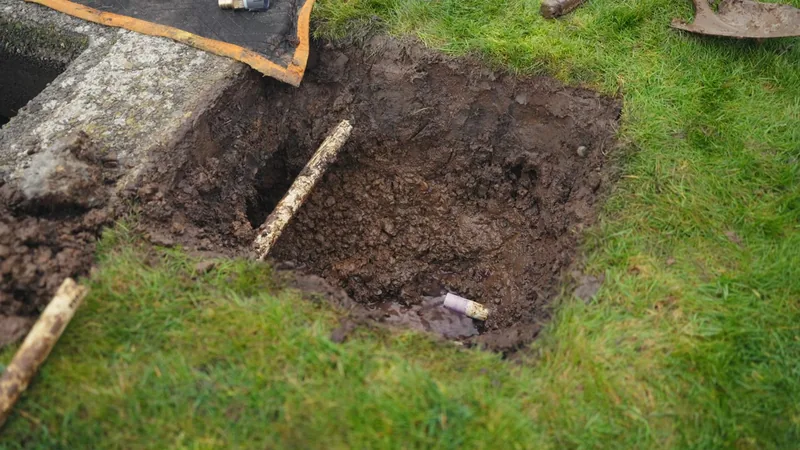
When trenchless is not the answer
A collapsed section, a severe offset or a large sag will usually need excavation. So will a pipe that no longer has a continuous path for a liner to travel. If the plumber cannot explain why trenchless fits your line, ask for the open-trench option too.
Trenchless methods also do not solve problems that come from the surrounding ground, such as soil movement that keeps shifting the pipe. The camera and the plumber's explanation of why the pipe failed matter as much as the repair method itself.
Trenchless Sewer Repair questions in Garner
When is trenchless pipe lining a good option?
When the pipe is cracked, leaking at joints or invaded by roots but has not collapsed. The liner needs a continuous, reasonably round pipe to travel through.
Is trenchless always cheaper than digging?
Not always. It reduces surface restoration, so it matters most under driveways, patios and mature trees. Where the pipe is shallow in open lawn, a short trench can be simpler and less costly.
What is the difference between lining and pipe bursting?
Lining cures a new pipe inside the old one. Bursting pulls a new pipe through the old line and breaks the old one outward. Bursting needs larger access pits.
Need trenchless sewer repair in Garner?
Call, describe what you are seeing, and get a plumber for your part of town. Prices are quoted after the plumber diagnoses the problem.