Garner, NC · Water Softeners
Water Softener Installation in Garner: Do You Need One, or Is the Problem Something Else?
The usual reasons people consider a softener are spots on glass, a film in the shower, a heater that seems to fail early and soap that will not lather. All of those are hard-water symptoms, and on City of Raleigh water, which serves most of Garner, hardness is low. That makes the first question on this page whether a softener is the right answer at all.
The sections below start with what Garner's water actually is, then cover what else produces the same symptoms, what a softener and a filter each do, and how installation and service work when one does make sense. A water softener installation plumber in Garner NC should ask for a hardness reading before quoting any equipment.
What Garner's water actually is
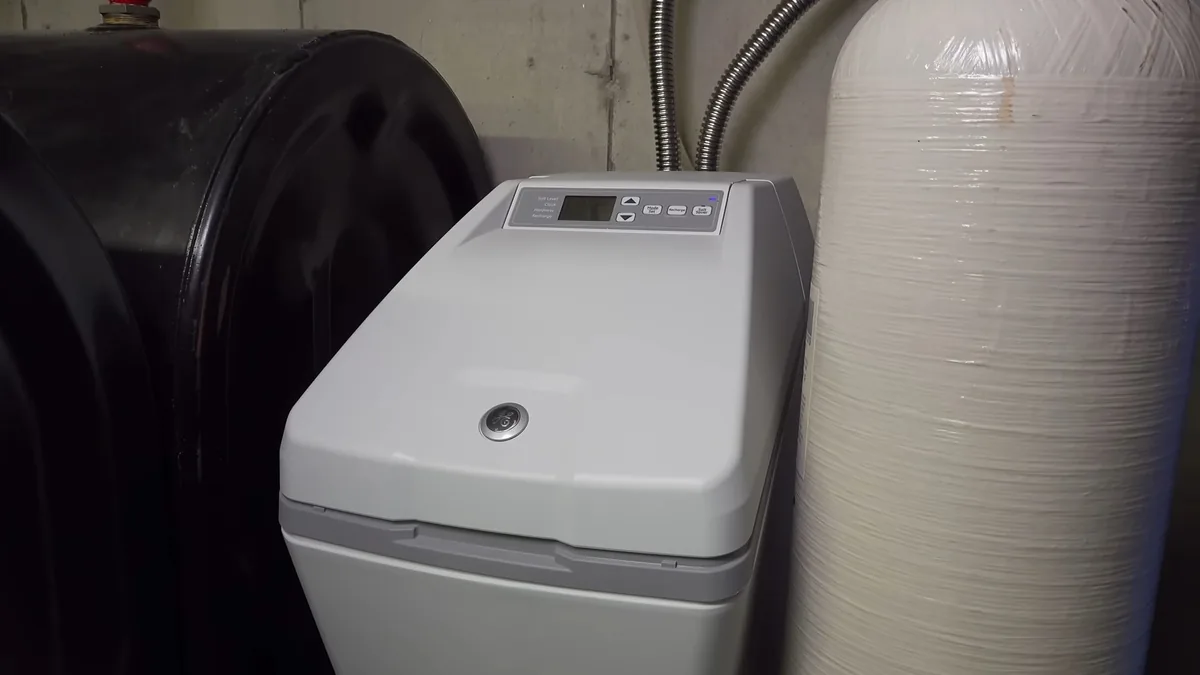
Garner homes on City water receive water from the City of Raleigh. Raleigh's published water quality data lists hardness at roughly 1.4 to 1.5 grains per gallon, which falls in the soft range. The water is treated with chloramine and fluoride. Those figures come from the City's own report, and the number to compare against is your own water.
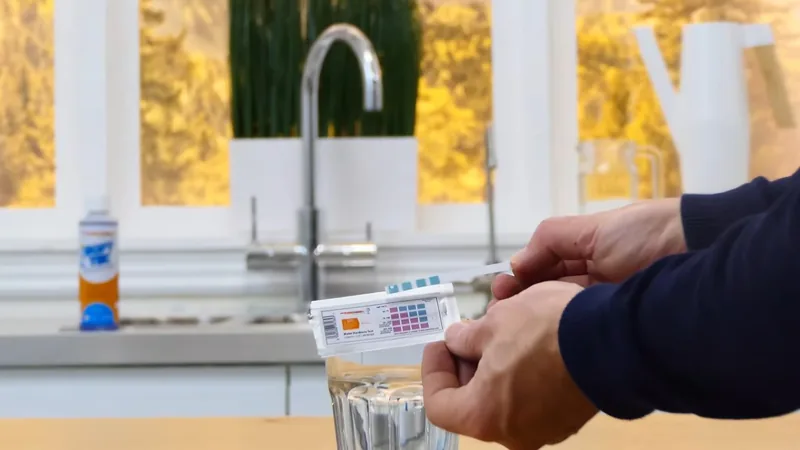
Soft water does not leave much scale on fixtures or inside heaters. If your home is on City water and you see heavy scale, either the water is harder than the City's average where you live, or the cause is something other than hardness. A simple test strip, or a lab test, settles the question before any equipment is sold to you.
Homes on a private well are different. Well water varies from property to property, and hardness, iron and acidity can all be well outside City ranges. For those homes a lab test comes first, and the answer shapes the equipment.
Other causes of the symptoms a softener is sold for
- Spots on glass: dishwasher rinse-aid, a water temperature that is too low or a worn dishwasher spray arm, not only hardness.
- Film in the shower: soap residue, particularly from bar soap, which forms a film even in soft water.
- Short heater life: age, a worn anode rod or a leaking relief valve, as covered on the water heater repair page.
- Low flow from showerheads: mineral buildup in the head itself or a partly closed valve.
- Soap that will not lather: usually hard water, but it can also be the soap.
A plumber who starts with a test and a look at the fixtures, not with a sales sheet, is working in your interest. Ask what readings were taken and what they showed before any system is quoted.
Softener or filter: two different jobs
A softener removes calcium and magnesium by swapping them for sodium or potassium in a resin bed, and the resin is recharged with salt. It addresses hardness and nothing else. A filter removes particles, chlorine taste or specific contaminants, depending on its media, and does nothing for hardness.
- Hardness and scale: a softener.
- Taste and odor from chlorine or chloramine: a carbon filter at the tap or on the main.
- Sediment and grit: a sediment filter on the main line.
- Iron and sulfur smell on a well: specific iron or sulfur treatment, not a standard softener.
- Drinking water quality: a point-of-use filter or a reverse-osmosis unit at one tap.
Whole-home filtration and softening are often sold together, but they solve different problems. Ask which problem each piece of equipment is meant to solve, and whether you have measured it.
Not sure whether you need a softener at all? Say so on the call. A test and a look at the fixtures comes first.
When a softener does make sense
A softener is a sound choice where a test shows real hardness. That is most often a home on a private well, or an address whose water tests well above the City's average. In those homes a softener protects heaters, fixtures and appliances and improves how soap works.
- Test the water and write down the hardness figure.
- Ask the plumber to size the unit by hardness and household use, not by a standard package.
- Ask where the drain line for the regeneration water will go.
- Ask what salt or potassium costs over a year and who refills it.
- Ask about the warranty on the tank, the valve and the resin.
If the home is on City water and hardness tests low, a softener is not the answer, and a plumber who says otherwise should explain the reading that supports it.
How installation works
A softener goes on the main supply line, usually in a garage or utility room, ahead of the water heater. It needs a drain for the regeneration cycle, an outlet for the control head and a bypass so water keeps flowing during service. Outdoor hose bibs are normally left off the softened side.
Where the unit goes matters in a Wake County winter. Winter lows hover around or just below freezing and occasionally fall into the teens. A softener in an unheated garage needs insulated lines and a location the plumber has judged safe from freezing, because a frozen resin tank cracks.
Service and repair of an existing softener
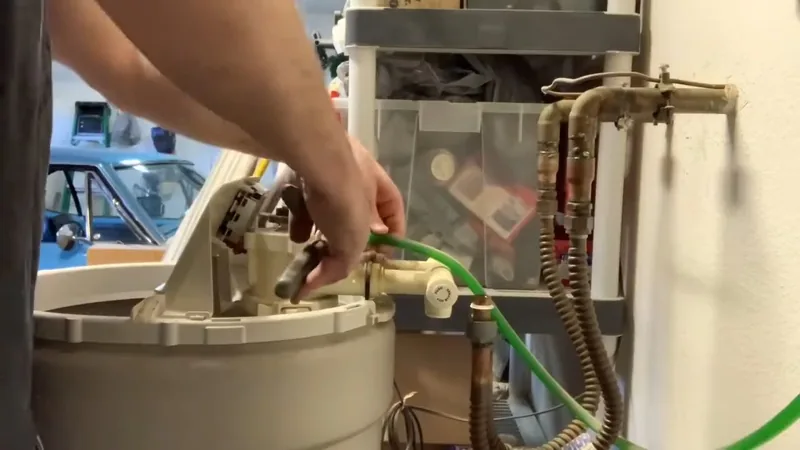
Common softener problems are simple. A bridged salt tank prevents the brine from forming, a clogged injector stops regeneration, a worn valve leaks to the drain and an exhausted resin bed stops softening. Many of these are cleared with service, not replacement.
- Hard water returns but the salt tank is full: a salt bridge or a stuck regeneration.
- Water continues running to the drain: a worn valve or a seal.
- Salty taste at the tap: a brine draw problem or a rinse problem.
- No regeneration at all: a control head fault, a power problem or a clogged injector.
Ask the plumber to measure hardness before and after service, so the repair is confirmed by a number, not a promise.
Permits, drains and who else is involved
Adding a softener changes plumbing, and a plumber should tell you whether a permit applies. The Town of Garner Inspections Department at Town Hall, 900 7th Avenue, handles plumbing permits. A rule specific to water softeners was not confirmed for this page.
The regeneration discharge must go to a proper drain with an air gap, never directly into a sewer line, and a plumber should show you where it ends. If you are replacing a water heater, replacing a tank heater may be the moment to decide about treatment, but only after a test.
Low pressure on the City side of your property line or a taste or odor issue that affects the whole street is a matter for Raleigh Public Utilities at (919) 996-3245, not a plumber.
Water Softeners questions in Garner
Does Garner water need a softener?
City of Raleigh water, which serves most of Garner, is soft at roughly 1.4 to 1.5 grains per gallon according to the City's published data. A softener is rarely the first fix on City water. Test your own water first, especially on a private well.
What is the difference between a softener and a water filter?
A softener removes hardness minerals by ion exchange. A filter removes particles, taste or specific contaminants and does nothing for hardness. They solve different problems.
How do I know if my existing softener is working?
Measure hardness before and after service. Common faults are a salt bridge, a clogged injector, a worn valve and exhausted resin, and many are fixed by service rather than replacement.
Need water softeners in Garner?
Call, describe what you are seeing, and get a plumber for your part of town. Prices are quoted after the plumber diagnoses the problem.