Garner, NC · Garbage Disposal Repair
Garner Garbage Disposal Repair for Jams, Leaks and a Motor That Only Hums
A disposal that hums and will not spin, one that leaks into the cabinet, and one that is simply dead are three different problems with three different fixes. Most disposal calls end in a repair of ten minutes, but a few end in replacement, and the difference shows in the first symptom you describe.
This page covers the checks you can make safely, what each symptom usually means, when a leak means the unit is finished, and what to weigh when replacing or installing one. Anyone who wants a plumber to install a garbage disposal in Garner NC should know first whether the sink already has the electrical outlet and the drain connections the unit needs.
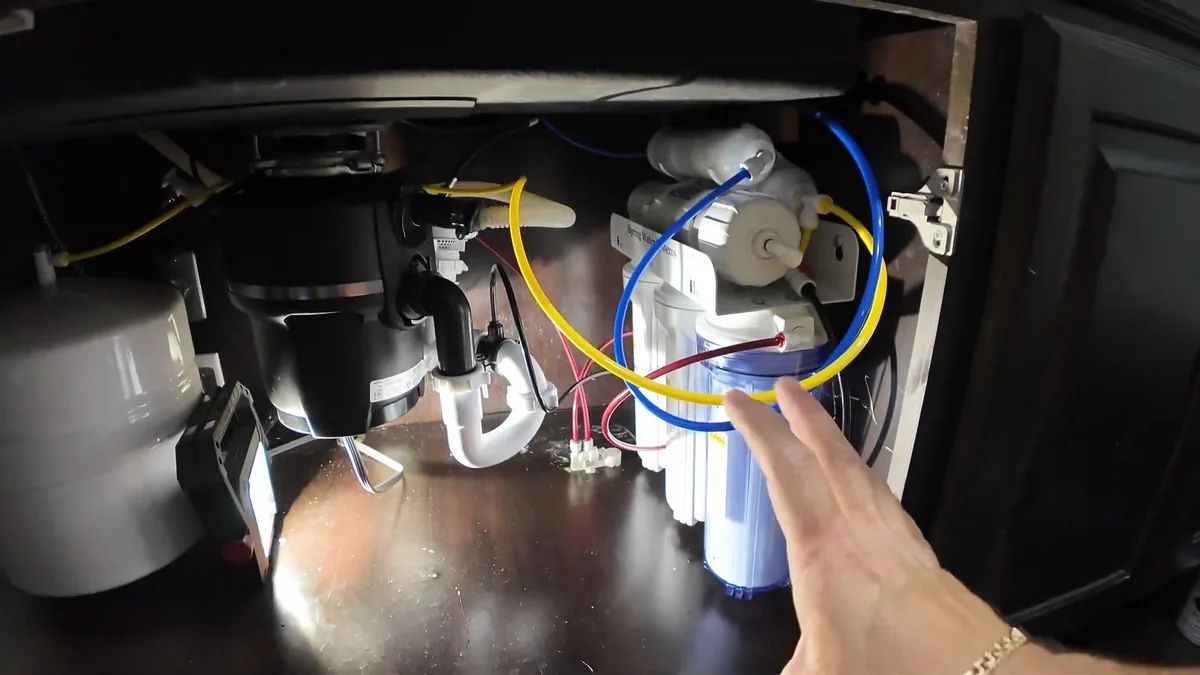
A humming disposal that will not turn: clearing the jam safely
A hum with no spin means the motor has power but the grinding plate cannot move. Something is wedged between the plate and the shredder ring, often a bone, a fruit pit or a bottle cap. Switch the disposal off at the wall switch first, and then unplug it or turn off its breaker before anything goes near the opening.
Never put a hand in the chamber. Use tongs or pliers to lift out anything you can see. Most disposals have a hex socket in the center of the underside, and a hex key turned back and forth frees a stuck plate. Many also have a red reset button on the underside that pops out after an overload, and pressing it restores power.
If the unit hums again after a reset, or the breaker trips, stop. A seized motor or a damaged plate will not clear with repeated attempts, and running it risks burning out the motor.
Disposal dead, slow or tripping the breaker: what it means
- No sound at all: the reset button has tripped, the outlet or switch has failed, or the unit has lost power.
- Hum and no spin: a jammed plate, usually clearable.
- Spins slowly or weakly: a worn motor or a partial jam, often a sign of age.
- Trips the breaker: an electrical fault in the motor or wiring, not a plumbing issue.
- Grinds noisily with a metallic scrape: a foreign object, or a loose or damaged shredder ring.
Tell the plumber the age of the unit and what changed just before it failed. A disposal that quit right after a hard object went down is a different case from one that has been fading for months.
If the breaker keeps tripping with the disposal unplugged, the fault is not in the disposal. That is a wiring issue for an electrician.
A leak under the sink: the fitting or the unit
Not every drip means a dead disposal. Water can come from the sink flange at the top, the dishwasher hose connection, the drain pipe joint or the unit body. Dry the area, run water into the sink with the disposal off, and see which spot gets wet first. Then run the disposal briefly and look again.
- Top of the unit, around the sink flange: failed putty or gasket, often repairable by resealing.
- Dishwasher hose connection: a loose clamp or cracked hose.
- Drain pipe joint or trap: a loose slip nut or worn washer.
- Body of the unit or the bottom seam: internal seal failure, which means replacement.
A leak from the body of the disposal cannot be fixed. If the unit is more than a few years old and the leak is from the body, replacement is the usual answer, and installation is part of the same visit.
Disposal humming with no spin? Tell the person on the phone the age of the unit and whether you have already pressed the reset button.
Repair or replace a disposal
Disposals are inexpensive relative to most plumbing, which pushes the decision toward replacement sooner than with a water heater. The deciding factors are age, the nature of the failure and the cost of the repair compared with a new unit.
- A jam or tripped reset on an otherwise sound unit: repair.
- A leak at the flange, hose or drain joint: repair.
- A leak from the body, a seized motor or a burned-out unit: replace.
- A unit more than a decade old with a repair that costs close to a new one: replace.
If a replacement is likely, ask what horsepower the plumber recommends and why, whether the mounting hardware can be reused and whether the dishwasher knockout plug has been removed. Wide cost ranges are on the typical cost ranges, and the plumber confirms the price after seeing the unit.
Installing a new disposal where there was none
A new installation needs an outlet or a hardwired connection, a switch, a sink with a standard drain opening and enough cabinet depth. Some homes have an unswitched outlet under the sink that can be adapted with a plug-in cord, and others need an electrician to add the switch and the circuit.
Ask who handles the electrical work, whether the drain trap needs reconfiguring and whether the dishwasher drain will tie in cleanly. If the sink has two bowls with a shared drain, ask how the second bowl will drain.
What belongs down a disposal and what does not
A disposal handles soft food scraps in small amounts with cold water running. It is not a trash can. Grease, coffee grounds in volume, fibrous vegetables, eggshell and pasta or rice all create problems further down the line, where they cool and cake inside the drain.
- Run cold water before, during and for 15 seconds after use.
- Avoid grease and oil, which cool and coat the pipe.
- Avoid large amounts of fibrous or starchy food.
- Never put in bones, fruit pits, glass, metal or plastic.
- Never use chemical drain cleaners in a disposal.
A slow kitchen drain that is not the disposal is a line problem, and kitchen drain clearing covers that case. If the same line keeps backing up, a camera inspection is the next step.
Permits, the water supply and who else may be needed
Replacing a disposal normally does not need a permit. If the work changes drain piping or adds a new circuit, ask the plumber or electrician whether the Town of Garner Inspections Department at Town Hall, 900 7th Avenue, needs to be involved.
If the leak under the sink is on the supply side, such as a failing shutoff valve or a cracked supply line, the repair belongs under fixture and sink repair. A leak that keeps appearing under the sink with no clear source may need leak detection to rule out a pipe in the wall.
Garbage Disposal Repair questions in Garner
Why does my garbage disposal hum but not spin?
The motor has power but the grinding plate is stuck, usually on a hard object. Switch the unit off, unplug it, remove what you can with tongs, and turn the plate with a hex key. A red reset button on the underside restores power after an overload.
Is a leaking disposal always a replacement?
No. Leaks at the sink flange, the dishwasher hose or a drain pipe joint are usually repairs. A leak from the body or the bottom seam is internal, and the unit needs replacing.
Can I put my hand in the disposal to clear a jam?
No. Switch it off, unplug it or shut off its breaker, and use tongs or pliers. A hex key in the socket on the underside frees many jams without reaching into the chamber.
Need garbage disposal repair in Garner?
Call, describe what you are seeing, and get a plumber for your part of town. Prices are quoted after the plumber diagnoses the problem.